Home – Project Detail
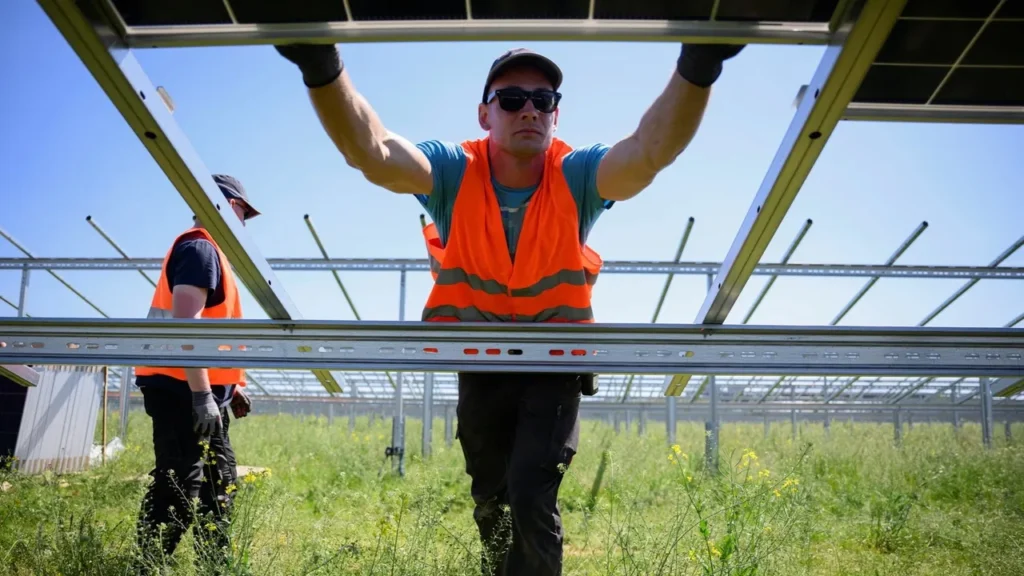
As of May 2025, the solar energy sector is experiencing significant growth and transformation, driven by technological advancements, policy changes, and increasing demand for clean energy. Here’s an overview of the key developments shaping the solar landscape this year.
The United States is on track to add approximately 97 gigawatts (GW) of new power capacity in 2025, with solar and battery storage leading the charge. Solar alone is expected to contribute over 50% of this increase, marking a substantial rise from previous years. Texas and California are at the forefront, with Texas planning to add nearly 12 GW of solar capacity. (Carbon Credits, U.S. Energy Information Administration)
Battery storage is also seeing unprecedented growth, with an anticipated addition of over 31 GW in 2025. This expansion is crucial for balancing supply and demand, especially as renewable energy sources become more prevalent. (U.S. Energy Information Administration)
Recent legislative developments have introduced uncertainty into the solar sector. A House-passed tax bill, supported by former President Donald Trump, proposes to eliminate $522 billion in clean energy subsidies established under the Inflation Reduction Act. These subsidies have been instrumental in driving investments in solar, wind, and other renewable energies. The proposed rollback has raised concerns among industry stakeholders and some Republican senators, particularly those from states benefiting from clean energy investments. (The Washington Post)
The Senate’s response to this bill will be critical in determining the future trajectory of solar energy development in the U.S.
Globally, solar power continues to outpace other energy sources in growth. In the first quarter of 2025, solar generation in the U.S. increased by 44% compared to the same period in 2024, surpassing hydroelectric power for the first time. (Climate Central, Ars Technica)
Innovations in solar technology are also making headlines. The development of perovskite solar cells has led to more efficient and flexible solar panels. Companies like Anker have introduced products such as the Solix Solar Beach Umbrella, featuring advanced perovskite cells that perform better in various lighting conditions. (Wikipedia)
Community solar projects are expanding, providing opportunities for individuals who cannot install solar panels on their properties to benefit from solar energy. As of June 2024, there were over 7,800 megawatts of community solar capacity across 44 U.S. states. (Wikipedia)
Agrivoltaics, the practice of combining agriculture with solar energy production, is gaining traction. The U.S. has more than 500 active agrivoltaic sites, adding a total of 9 GW of solar capacity to the grid. These projects demonstrate the potential for dual land use, supporting both food production and renewable energy generation. (Wikipedia, Carbon Credits)
Despite policy uncertainties, the solar energy sector is poised for continued growth in 2025 and beyond. Advancements in technology, increased storage capacity, and innovative project models like community solar and agrivoltaics are driving the industry forward. Stakeholders are closely monitoring legislative developments, as the outcomes will significantly influence the pace and direction of solar energy adoption in the United States.(Wood Mackenzie)